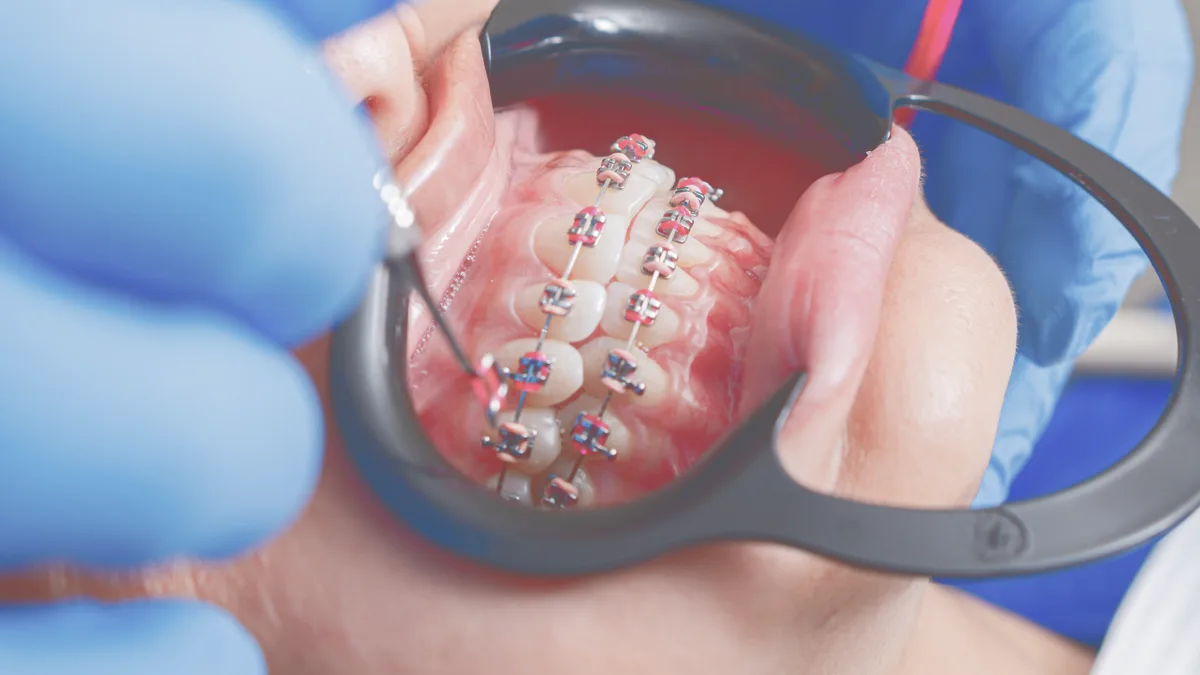
There is less room along the arch than the teeth need, so they overlap, rotate and sit out of line.
What it is
Crowding is arithmetic before it is anything else: the sum of the tooth widths exceeds the length of the arch that has to hold them. The deficit is measured in millimetres at the consult, and it decides everything that follows — under about 4 mm we can usually create the space by expanding the arch or reducing enamel contacts, and above it we are talking about extractions.
Arch-length deficiency — the plan
- Records: photographs, a scan of both arches and a lateral cephalogram.
- A space analysis in millimetres, shown to you on the model.
- Levelling and alignment with fixed appliances — the first phase, and the one that does most of the visible work.
- Working and detailing phases, then retention.
| Clinical name | Arch-length deficiency |
|---|---|
| Appliance | Fixed appliances |
| Typical duration | 18 to 24 months |
| From | £2,650 |
| Retention | Included — bonded lower, removable upper, two years of reviews |
Next step
A consultation is £65 and includes photographs, a scan and a lateral cephalogram, plus a written plan with the fee on it. Nothing is started on the day.
Other faults
- Spacing and diastema — Generalised spacing / midline diastema
- Rotated teeth — Axial rotation
- Deep bite — Increased overbite / curve of Spee
- Midline discrepancy — Dental midline deviation